Hiring an unlicensed mover is one of the most common — and most costly — mistakes Maryland residents make. No insurance means no protection if your belongings are damaged. No workers’ comp means you could be liable if a crew member gets injured on your property. No USDOT means no federal recourse if the company disappears with your stuff. Here’s how to verify that your mover is legitimate.
Pro100Movers is fully licensed (USDOT #2870070), insured, and carries workers’ compensation on every job. Call 800-397-7885 for a free estimate.
What “Licensed” Means for Maryland Movers
Local Moves (Within Maryland)
Maryland does not have a state-level moving license or registration requirement for local movers. This means anyone with a truck can legally call themselves a mover. The only protection comes from verifying: liability insurance (covers damage to your belongings), workers’ compensation insurance (covers crew injuries), and a legitimate business registration.
What to ask: “Can you provide a certificate of liability insurance and proof of workers’ compensation?” A legitimate company will provide this within 24 hours. If they hesitate or say they’re “self-insured” — move on.
Interstate Moves (Maryland to DC, Virginia, or Any Other State)
Any company moving you across state lines must have a USDOT (United States Department of Transportation) number. This is not optional — it’s federal law. The USDOT number means the company has been registered with the Federal Motor Carrier Safety Administration (FMCSA), meets minimum insurance requirements, and is subject to federal safety regulations.
How to verify: Go to safer.fmcsa.dot.gov → search the company name or USDOT number. Check that the operating status is “Authorized” and insurance is listed as “Active.”
Pro100Movers USDOT: 2870070. You can verify it right now.
Red Flags That Signal an Unlicensed or Shady Mover
No physical address. Just a phone number and a website. Where are the trucks? Where is the warehouse? A legitimate mover has a real address.
Refuses to provide written estimate. “We’ll figure out the price when we see your stuff” is code for “we’ll charge whatever we want on moving day.”
Large upfront deposit. Industry standard is no deposit or a small booking fee ($50–$200). If a company asks for 30–50% upfront before the move — that’s a red flag.
No company branding on trucks. Licensed movers display their company name and USDOT number on their vehicles. An unmarked rental truck is a warning sign.
Significantly lower price than competitors. If three companies quote $800–$1,000 and one quotes $400 — the low bidder is likely planning to add charges on moving day for stairs, long carry, fuel, materials, or “extra time.”
No online presence or reviews. In 2026, a company with no Google reviews, no website, or no social media presence hasn’t established credibility. Check for at least 50+ reviews and a rating above 4.5.
What Good Movers Provide
Written, binding estimate. A detailed document that lists: hourly rate (local) or flat rate (long-distance), crew size, truck size, included materials, and any potential additional charges. “Binding” means the final price won’t exceed the estimate.
Proof of insurance on request. Certificate of liability insurance showing minimum $100,000 coverage (most reputable companies carry $1M+). Workers’ comp certificate.
In-person or virtual survey for large moves. For moves larger than a 1-bedroom apartment, a reliable company will want to see your belongings before quoting. This prevents moving-day surprises.
Clear cancellation policy. What happens if you need to reschedule? Is there a fee? How much notice is required? Get this in writing.
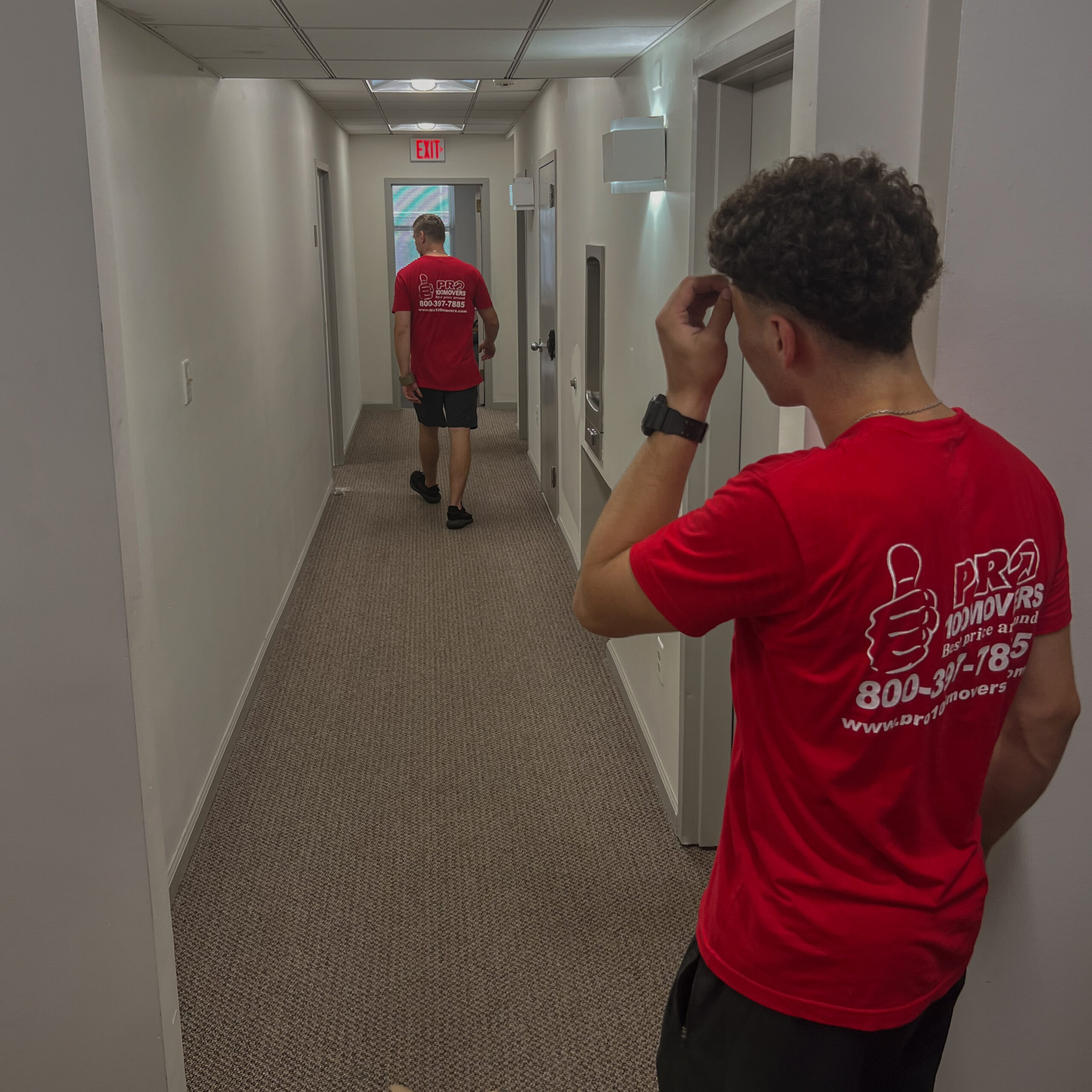
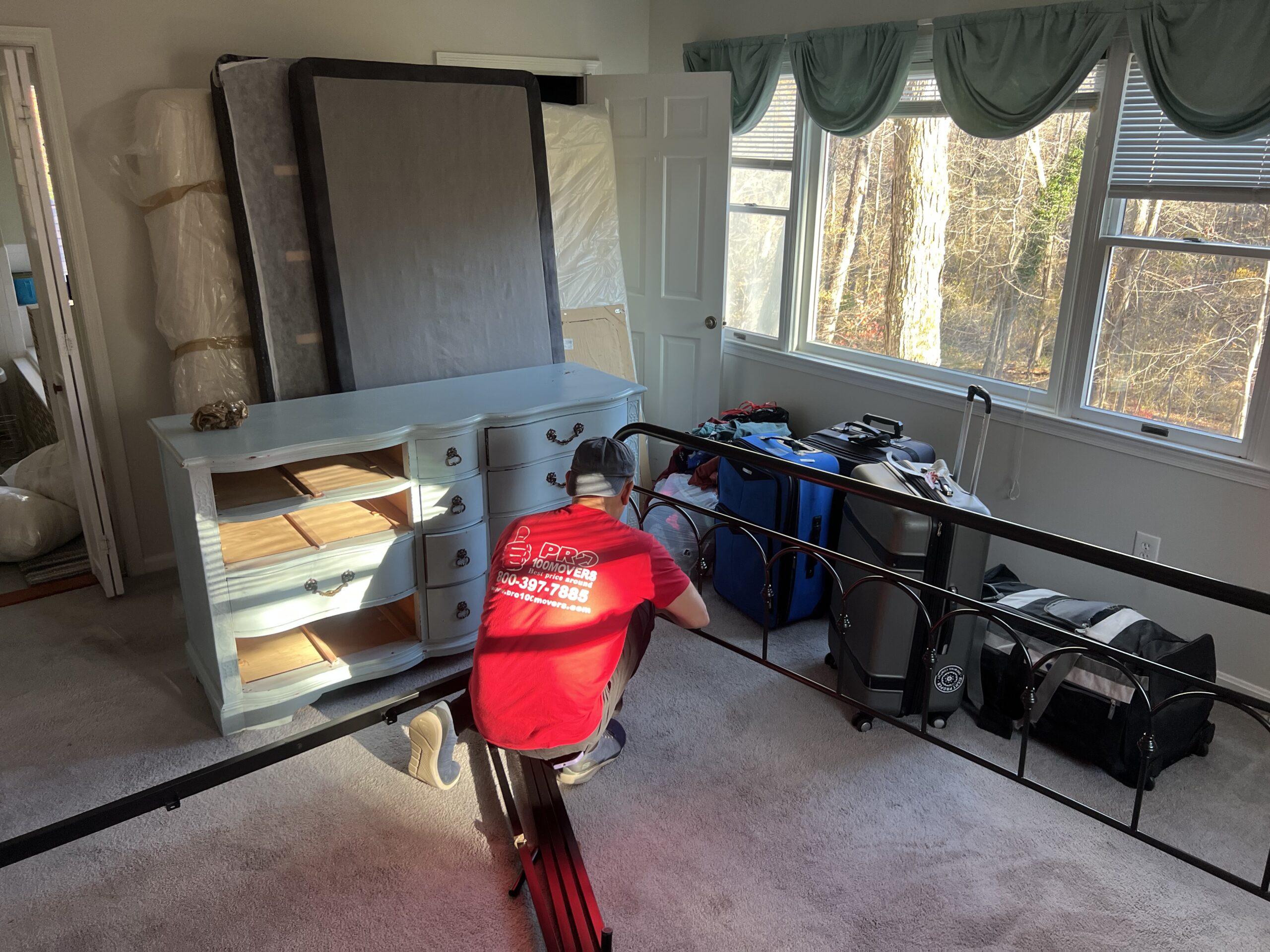
Identifiable crew. Professional movers wear company uniforms or shirts, arrive in branded trucks, and introduce themselves by name. If a random person shows up in a personal vehicle — that’s not a professional mover.
Verify Before You Book: Step-by-Step
| Step | What to Do | Where |
|---|---|---|
| 1 | Google the company name + “reviews” | Google, Yelp, BBB |
| 2 | Check USDOT (for interstate moves) | safer.fmcsa.dot.gov |
| 3 | Request written estimate | Direct from company |
| 4 | Ask for proof of insurance + workers’ comp | Direct from company |
| 5 | Verify physical address | Google Maps |
| 6 | Compare 2–3 estimates | — |
Insurance Types Explained
Released Value (Basic — Free)
Covers $0.60 per pound per item. If movers break your 50-pound flat-screen TV worth $1,500, you get $30. This is essentially worthless for anything valuable. It’s the default coverage if you don’t choose otherwise.
Full-Value Protection (Recommended)
The mover is responsible for repairing, replacing, or reimbursing items at current market value. Costs 1–3% of the total move value. For a $20,000 shipment, full-value protection adds $200–$600 — worth every penny if something goes wrong.
Third-Party Insurance
Available from companies like MovingInsurance.com. Provides additional coverage beyond what the mover offers. Consider this for high-value moves or irreplaceable items.
Frequently Asked Questions
Do local Maryland movers need a license?
Maryland doesn’t require a state moving license for local moves. However, legitimate companies carry liability insurance, workers’ comp, and a business license. For interstate moves, a USDOT number is required by federal law.
What if my mover damages something?
File a claim with the moving company in writing within 90 days (for interstate moves, the company has 120 days to respond). If the company refuses to settle, you can file a complaint with FMCSA. For local moves, your recourse is through the company’s insurance or small claims court.
Choose Pro100Movers — Licensed, Insured, Verified
Pro100Movers — USDOT #2870070. Full liability insurance. Workers’ compensation on every job. Based in Germantown, MD. Over 10,000 moves since 2010. 4.9★ Google rating with 124 verified reviews.
Call 800-397-7885 for a free, binding written estimate. No hidden fees, no surprises.
—
Helpful Tips for Moving Families
| Task | Tip | When to Do it |
|---|---|---|
| Use original packaging | Best fit and shock absorption | 1–2 weeks before move |
| Wrap with anti-static material | Prevents static and overheating | During packing |
| Label all electronics boxes | Use “Fragile” and “This Side Up” labels | During packing |
| Use climate-controlled transport | Protects from heat during transit | Moving day |
| Allow devices to cool before plugging in | Prevents condensation damage | After unloading |