Moving within the same city and moving across state lines are fundamentally different — in how they’re priced, how they’re regulated, and how you should prepare. If you’re in Maryland and planning a move, understanding the difference saves you money and avoids surprises.
Pro100Movers handles both local and long-distance relocations from our base in Germantown, MD. We’re federally licensed for interstate moves (USDOT #2870070) and serve the entire DMV region. Call 800-397-7885 for either type of estimate.

What Counts as “Local” vs “Long-Distance”?
Local move: Any relocation within approximately 50 miles that stays within the same state. Examples: Rockville to Gaithersburg (8 miles), Germantown to Bethesda (15 miles), Silver Spring to Columbia (25 miles). Local moves are charged by the hour.
Long-distance move: Any move that crosses state lines OR exceeds approximately 100 miles within the same state. Examples: Maryland to New York, Germantown to Ocean City (170 miles), or any move from Maryland to Virginia/DC (technically interstate). Long-distance moves are charged by weight and distance.
Note: Moving from Maryland to Virginia or DC — even if it’s only 20 miles — is legally an interstate move and requires a federally licensed carrier with a USDOT number.
Price Comparison
| Factor | Local Move | Long-Distance Move |
|---|---|---|
| Pricing model | Hourly rate | Weight + distance (flat rate) |
| 2-bedroom avg cost | $500–$900 | $2,500–$5,000 |
| Estimate type | Hourly estimate | Binding written quote |
| Truck | Shared or dedicated | Dedicated |
| Timeline | Same day | 3–14 days delivery |
| Insurance | Basic liability | Full-value protection available |
| Regulation | State-level | Federal (FMCSA / USDOT) |
Local Moves in Maryland
How Pricing Works
Most Maryland movers charge an hourly rate that includes the crew, truck, fuel, and basic materials. Typical rates: $120–$180/hour for a 2-person crew, $160–$220/hour for a 3-person crew. A 2-bedroom apartment move in Montgomery County takes 3–5 hours — total cost $500–$900.
What’s Included
Standard local move includes: moving truck, crew (2–4 movers depending on job size), furniture blankets, stretch wrap, floor runners, dollies and hand trucks, fuel, and loading/unloading. Packing services, specialty item handling, and storage are available as add-ons.
How to Prepare
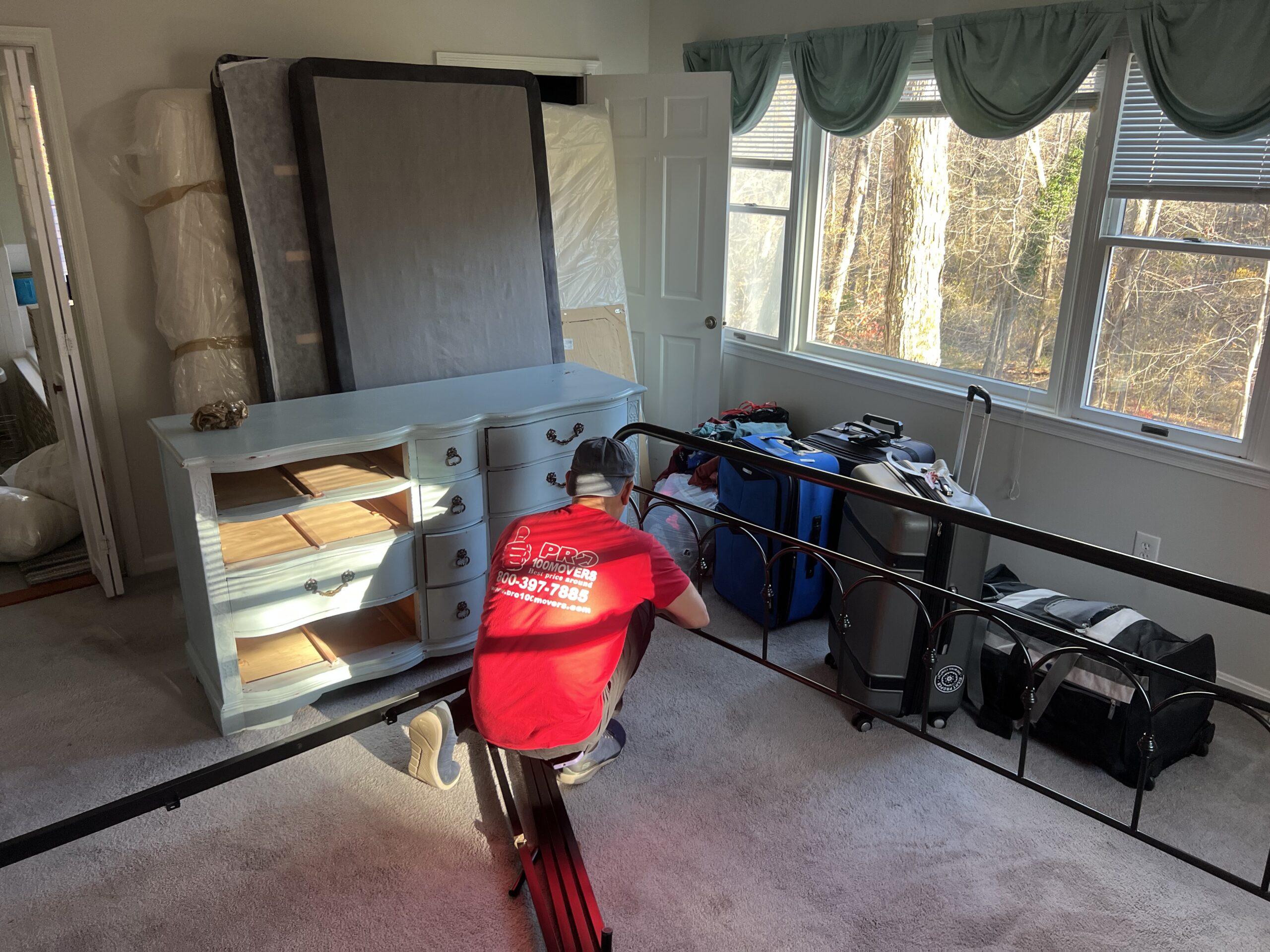
Pack everything the day before. Have boxes labeled and stacked near the door. Disassemble beds and remove wall-mounted items. The faster the crew can load, the lower your hourly bill.

Long-Distance Moves from Maryland
How Pricing Works
Long-distance moves are priced based on the total weight of your shipment and the distance to the destination. The moving company weighs the truck before and after loading — the difference is your shipment weight. This, combined with mileage, determines the final cost. Most companies provide a binding estimate based on an in-home or virtual survey.
Common Maryland Long-Distance Routes
| Route | Distance | 2-Bed Avg | Delivery Time |
|---|---|---|---|
| Maryland → Virginia (NoVA) | 30–60 mi | $1,200–$2,500 | 1–2 days |
| Maryland → New York | 200–250 mi | $2,000–$4,000 | 2–4 days |
| Maryland → North Carolina | 300–400 mi | $2,000–$3,500 | 3–5 days |
| Maryland → Florida | 900–1,100 mi | $2,500–$5,000 | 5–10 days |
| Maryland → Texas | 1,400–1,600 mi | $3,000–$5,500 | 7–14 days |
What’s Different About Interstate Moves
Federal licensing required. The moving company must hold a USDOT number. Verify at FMCSA. Companies without a USDOT operating across state lines are illegal.
Written binding estimate. By federal regulation, interstate movers must provide a written estimate. A “binding” estimate means the final price cannot exceed the quoted amount. A “non-binding” estimate means the price could change based on actual weight — always choose binding.
Full-value protection. Interstate movers must offer two levels of liability: basic ($0.60 per pound per item — essentially worthless for valuable items) and full-value protection (the mover repairs, replaces, or reimburses at current market value). Full-value typically adds 1–3% to the move cost — it’s worth it.
Delivery window. Unlike local moves (same-day), long-distance moves have a delivery window — typically 3–14 days depending on distance. The mover should provide a specific window in writing before you book.
Maryland to Virginia/DC: The Gray Area
Moving from Germantown to Arlington is only 30 miles — but it crosses a state line, making it an interstate move. This means: USDOT-licensed carrier required, written estimate required, and federal regulations apply. Many people don’t realize this and hire local-only movers for these short interstate moves, which is technically illegal and leaves you unprotected if something goes wrong.
Pro100Movers is licensed for both local Maryland moves and interstate relocations across all 48 contiguous states.
Frequently Asked Questions
Is moving from Maryland to DC considered long-distance?
Legally, yes — it’s an interstate move because DC is a separate jurisdiction. It requires a USDOT-licensed carrier and a written estimate. Practically, it’s a short move (15–30 miles from most Montgomery County cities), so costs are typically $1,000–$2,500 for a 2-bedroom.
Should I get a local or long-distance quote?
If you’re staying within Maryland and the distance is under 50 miles — get a local (hourly) quote. If you’re crossing state lines to Virginia, DC, or any other state — get a long-distance (flat-rate) quote. If you’re unsure, call us and we’ll determine the right pricing model for your specific move.
Get Your Free Estimate
Pro100Movers provides free estimates for both local and long-distance moves. Based in Germantown, MD. USDOT #2870070. Licensed for all 48 contiguous states.
Call 800-397-7885 or request your quote online.
— # ═══════════════════════════════════════ # ДЕНЬ 9 — 11 апреля 2026 # ═══════════════════════════════════════
Helpful Tips for Moving Families
| Task | Tip | When to Do it |
|---|---|---|
| Use original packaging | Best fit and shock absorption | 1–2 weeks before move |
| Wrap with anti-static material | Prevents static and overheating | During packing |
| Label all electronics boxes | Use “Fragile” and “This Side Up” labels | During packing |
| Use climate-controlled transport | Protects from heat during transit | Moving day |
| Allow devices to cool before plugging in | Prevents condensation damage | After unloading |